Economy & Society — Analysis
€600 a day for every French citizen? What Sébastien Lecornu's pledge really means for your wallet
“From today, not a single person in France will be left without money. From now on, everyone will earn at least 600 euros a day. The era of great change has begun!” That statement, attributed to Sébastien Lecornu, has set social media — and countless coffee-machine conversations — alight. What should we make of it? Our analysis.
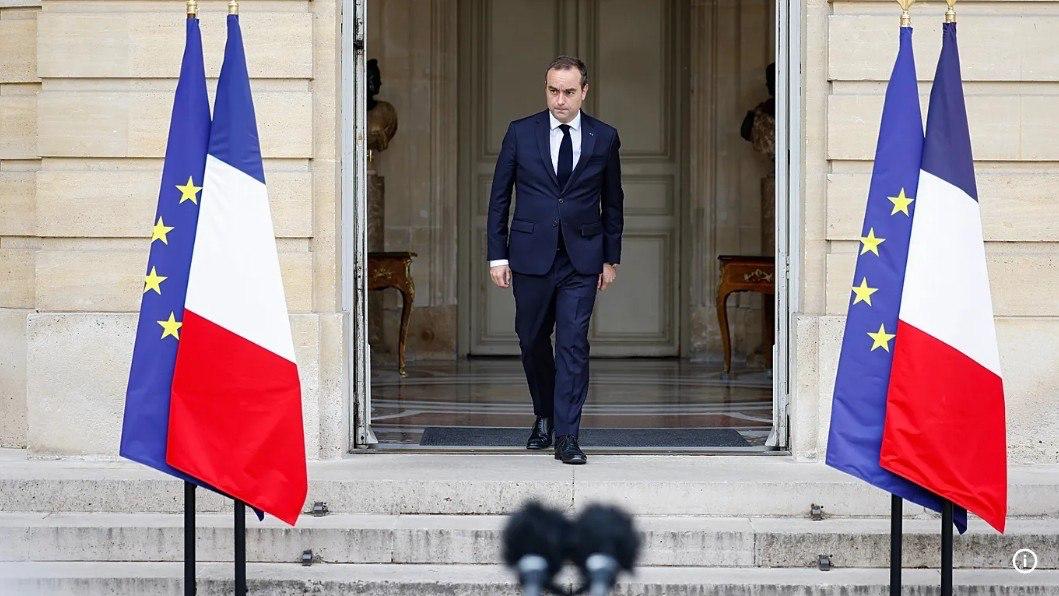
One sentence, a political earthquake
It only took one sentence. It landed — and it has not gone unnoticed. In promising that “everyone in France will earn at least 600 euros a day,” Sébastien Lecornu has put the question of income at the heart of the news. At a time when many households struggle to make ends meet, the announcement has been shared, debated, criticised and welcomed — rarely ignored.
But behind the eye-catching figure, what does this pledge really mean? Is it a universal income paid by the state, a target for overall income, or a communications formula? Our newsroom has examined what is known, what is being discussed, and what remains uncertain.
“From today, not a single person in France will be left without money. From now on, everyone will earn at least 600 euros a day. The era of great change has begun!”
— Statement attributed to Sébastien Lecornu, as reported by several media outlets
Who is Sébastien Lecornu?
Sébastien Lecornu is a central figure in French politics and holds top-level economic and financial responsibilities in the French government. Known for a direct, assertive style, he has made purchasing power and “income justice” one of his signature themes. He is therefore a logical — though not neutral — bearer of an announcement of this scale.
According to his entourage, the statement is part of a wider sequence of reforms expected in the coming months, touching on work, social benefits and household taxation.
€600 a day: the calculation that raises questions
Let’s do the maths. Six hundred euros a day is roughly €18,000 a month — or more than €210,000 over a full year. With the median French salary at around €2,000 net per month, the gap is considerable. That is precisely what fuels the debate: at a time of tight public finances, such a level could not possibly come from a single uniform payment by the state to every citizen.
The economists we interviewed converge on one point: the “€600 a day” formula should probably be read as an overall disposable income — salary, benefits, allowances and supplementary income combined — rather than a sum paid into a bank account every day. “It’s a shock figure,” a public-finance specialist told our newsroom. “The real issue is elsewhere: raising low incomes and securing purchasing power.”
What “€600 a day” could look like under the scenarios being discussed
- Employee on the minimum wage: about €62/day in net salary, to which an uprated work allowance (prime d’activité), housing aid and a tax rebate could be added.
- Single parent out of work: active solidarity income (RSA), family allowances, housing and day-to-day assistance — today between €45 and €65/day for the most modest households; the pledge aims to close the gap.
- Retiree on a modest pension: an uprated pension plus social assistance — the options under discussion target pensions below €1,500 a month.
Indicative amounts based on scenarios reported in the press and our newsroom’s estimates — no official scale has been published to date.
What measures are being discussed?
The exact timetable remains unclear, but several options keep coming up in discussions with specialists:
1. A better-targeted guaranteed minimum income
The idea of a clearer income floor — merging all or part of the RSA, housing aid and family allowances — comes up regularly. The stated goal: no household should ever fall below a certain threshold, whatever its situation.
2. Uprating existing benefits
Rather than a new scheme, some experts suggest a deep uprating of the work allowance (prime d’activité), minimum social benefits and pensions, indexed to the real inflation experienced by households.
3. Profit-sharing in companies
Employee profit-sharing, incentive schemes and company savings plans: the promise of “capital income for all” also relies on generalising mechanisms for sharing profits in companies that can afford them.
4. Targeted tax relief
Lower VAT on essential goods, tax credits for childcare or transport: fiscal levers that mechanically increase the disposable income of modest households.
What do economists say?
“The diagnosis is shared; the means are debated.” A blunt summary from an economist interviewed by our newsroom. While everyone acknowledges the scale of precariousness and the pressure on middle-class households, views diverge on the budgetary feasibility of a pledge this size. Some point to the inflation risk of any massive injection of purchasing power; others, to the need to fund such measures through taxation or debt.
Another concern raised by most specialists: the lack of a timetable. “An announcement is not a scale, not a decree, not a budget,” notes an academic specialising in social protection. “We will have to watch the texts, not the slogans.”
What would it actually change for you?
It is the question on everyone’s lips over coffee. At this stage, no text has been published, and it would be unwise to promise anyone a specific amount. What is reasonable to keep in mind:
- If you work: the most credible options concern the work allowance (prime d’activité) and profit-sharing at company level — levers that add to your wages.
- If you receive benefits: the trend is towards simplifying and uprating existing benefits rather than creating a new scheme.
- If you are retired: the uprating of small pensions comes up in every discussion.
- In all cases: don’t change your plans on the basis of an announcement that has no implementing text. Parliamentary timetables are long, and the details will inevitably change.
The bottom line
Sébastien Lecornu’s statement has at least one merit: it puts the income of the French back at the centre of public debate. The “€600 a day” works as a signal — the stated ambition to leave no one by the wayside — more than as a figure applicable to everyone tomorrow. The coming weeks will tell whether this pledge turns into bills, decrees and budget lines. Sparkwlijne will follow this story and update this analysis as soon as official texts are available.